

The questions behind a launch.
A holder count leaves a lot unanswered. How did those wallets get their tokens? What share of the supply went to them? Can they sell immediately? And does holding today mean anything when the next coin launches?
We want the allocation and the exit to be clear before someone takes a position. That is the reason for FOLD.
We’re adapting the Standard Reserve model from Robinhood Chain to Solana. The design has 1,000 nontransferable seats. Launches allocate tokens to those seats through a public vault. You hold a seat to keep collecting allocations. To claim them, you burn it.
A reason to stay for the next launch.
A seat connects participation across launches. You aren’t buying a fresh position every time a creator launches through FOLD. The seat is what makes you eligible for the allocations that follow.
That gives the holder a decision that lasts beyond a single coin. Claiming now means giving up what the seat could receive later. Holding means leaving what has already accumulated locked in the vault.
Seats are sold in a daily SOL Dutch auction. The price starts high and falls until someone buys. Once you own the seat, you can’t transfer it to another wallet or sell it on a market. The route out is the burn.
Make the allocation visible.
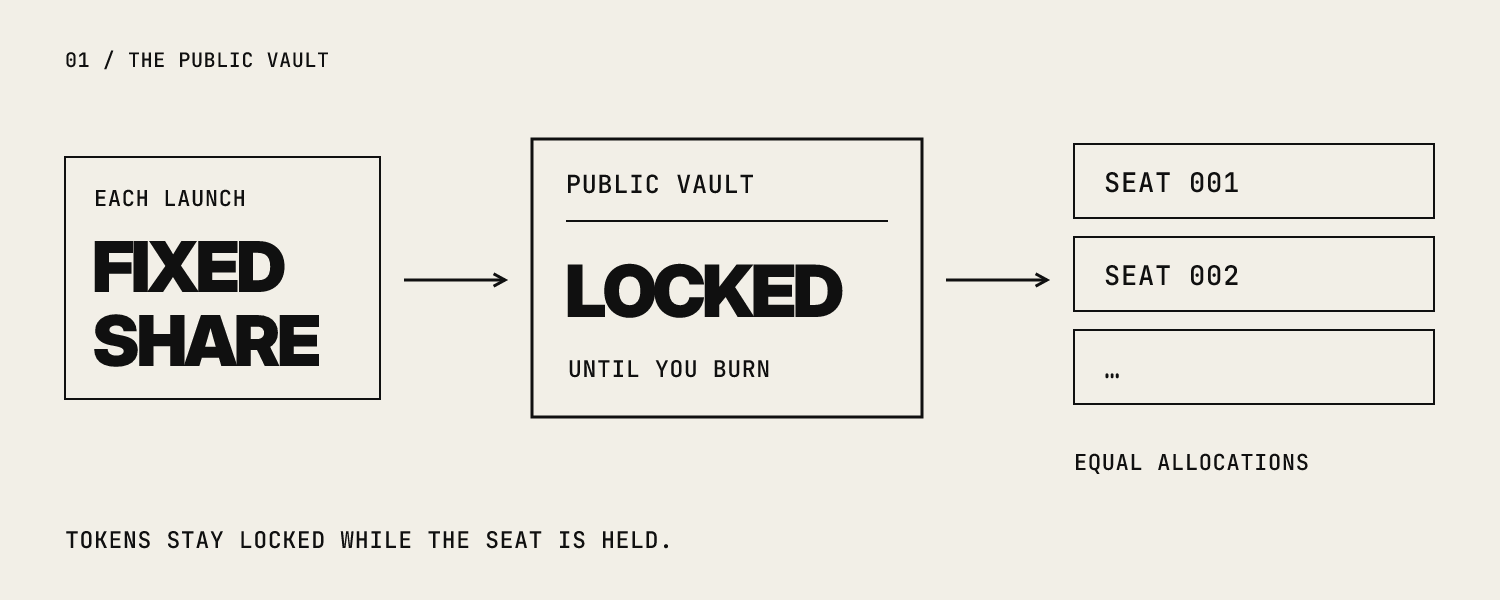
Every launch sends a fixed share of its token supply into a public vault, allocated equally across seats. While a seat is held, its accumulated tokens stay locked.
For a creator, this makes the seat allocation something people can inspect. There is a stated share, a visible destination and a defined way for it to leave. For a holder, the same rules explain what they are collecting and why it isn’t available to sell yet.
We want creators to be able to point to the distribution itself. The useful claim is that supply is allocated across the seat system and locked under its rules. The 1,000-seat limit does not, by itself, mean 1,000 different people or 1,000 active supporters.
Claiming should settle the decision.
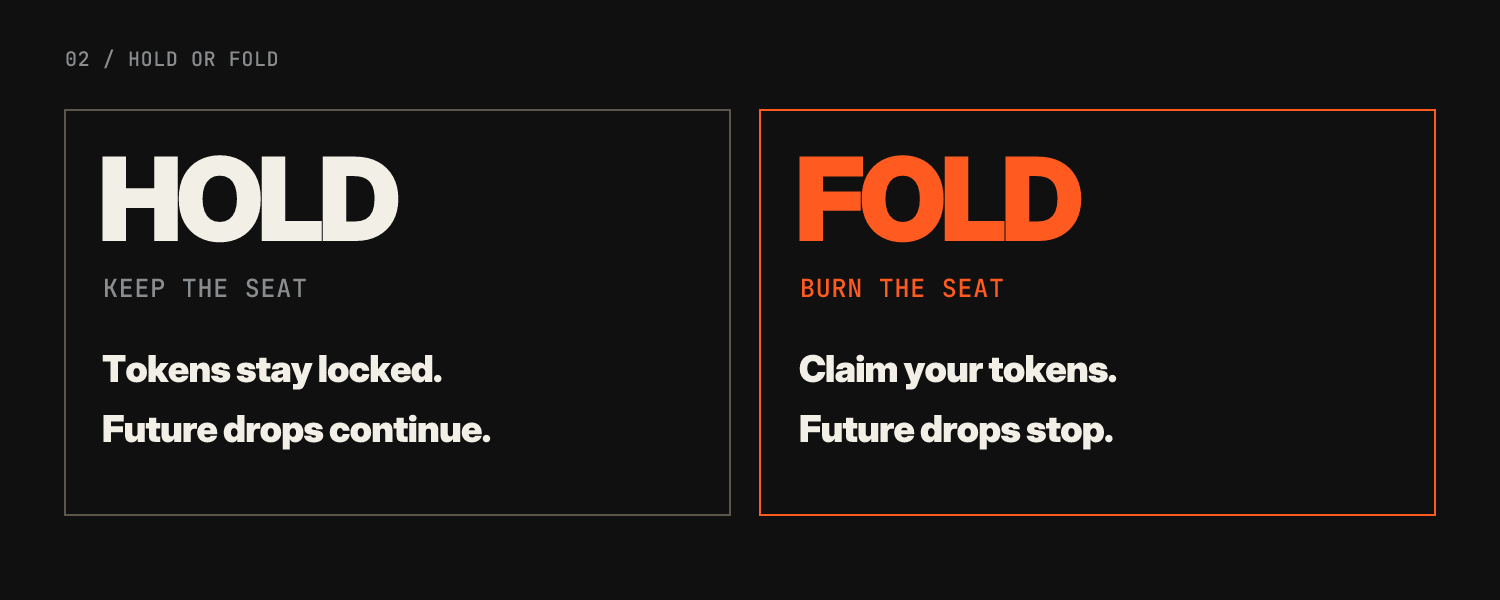
The central rule is simple: you can’t claim the accumulated tokens and keep the seat.
Burning releases what the seat has collected and ends its access to future drops. The claim is in the allocated tokens. The seat is gone. There is no separate claim button that lets someone take everything so far while keeping the same place in future launches.
This is the commitment we mean. It is a consequence built into the choice. Someone can decide they have collected enough and leave. Someone else can decide that future allocations are worth waiting for. Both decisions make sense; the protocol should make their consequences obvious.
Seats also need an inactivity rule.
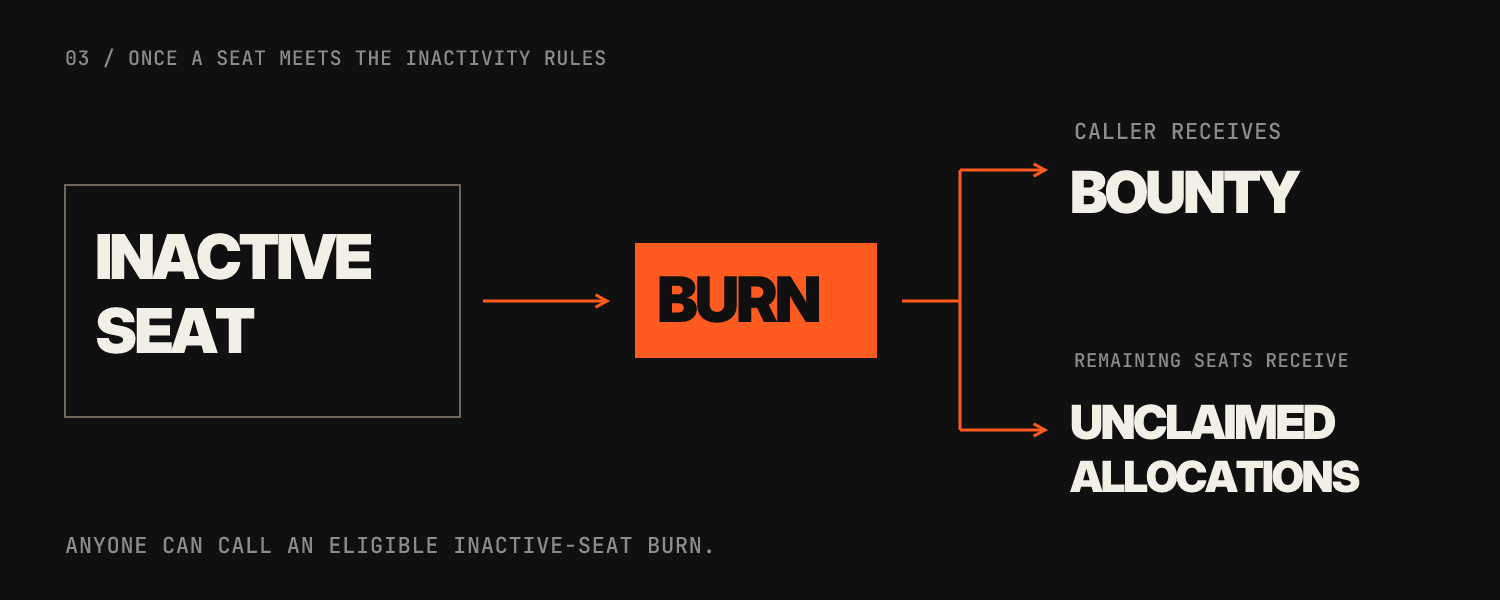
A limited seat system needs a way to deal with seats that stop meeting its activity requirements. FOLD includes an inactive-seat burn: once a seat is eligible, anyone can burn it and receive a bounty.
The seat’s unclaimed allocations go to the remaining seats. The person calling the burn receives the bounty, rather than taking the entire accumulated allocation.
That rule has a cost for the holder: keeping a seat means keeping it active. The exact activity requirements and eligibility conditions need to be published with the protocol so people can understand them before buying a seat.
What we want this to change.
We’re building FOLD to make participation across launches more deliberate. Creators get a defined distribution mechanism. Holders get a continuing position with a clear cost to claiming it. Anyone looking at a launch can inspect the seat allocation and understand the rule that unlocks it.
There are tradeoffs. Locked allocations give holders less immediate flexibility. Nontransferable seats remove the option to sell the seat itself. Future launches still have to be worth participating in. The mechanism can change the incentives around distribution; it can’t make a weak project valuable.
The idea is worth building if people can look at those terms and make an informed decision. Know where the supply sits. Know what staying gives you. Know what leaving takes away.
Hold the seat for future allocations. Burn it to claim what has accumulated.